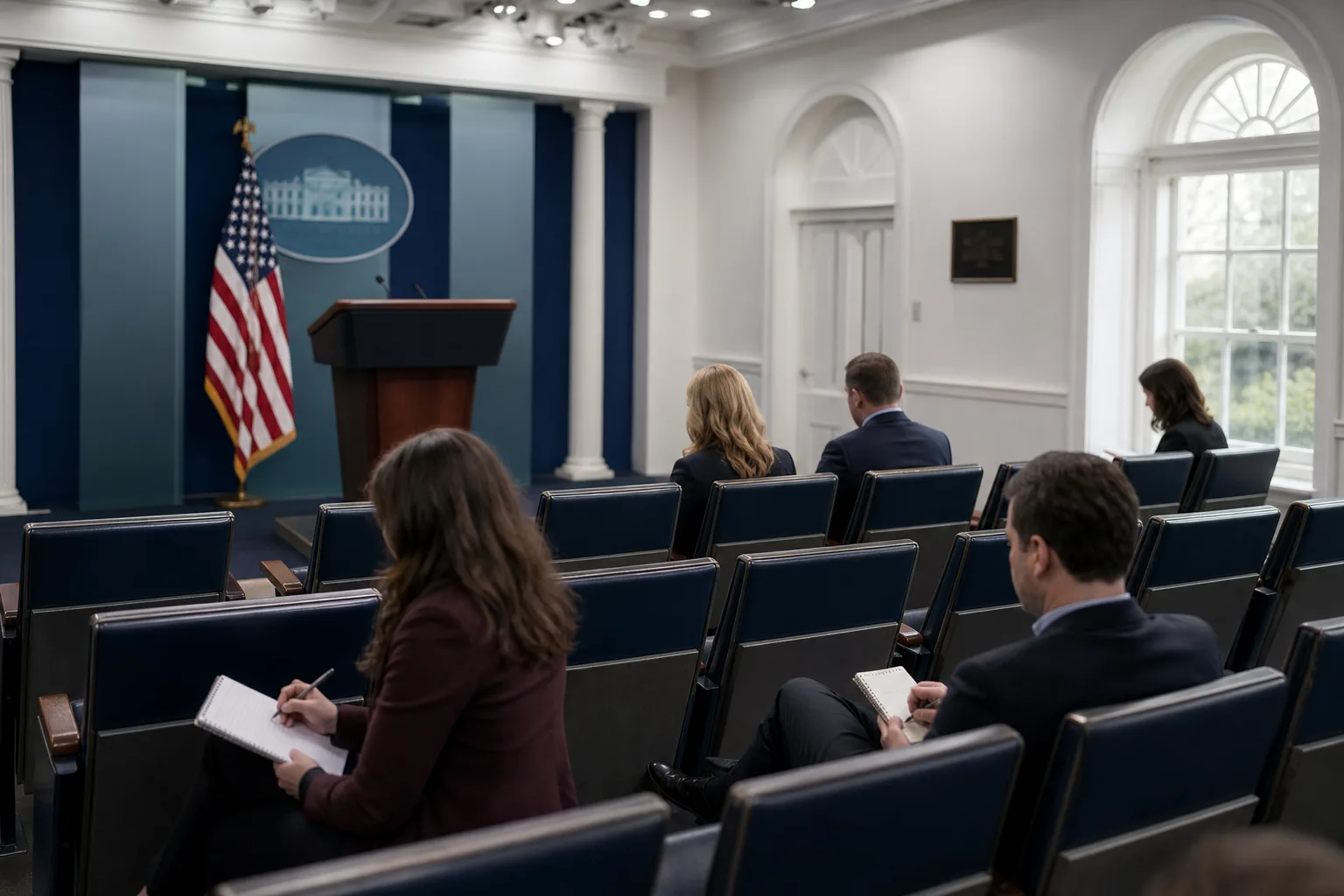
The First Amendment secures freedom of speech and the press. The White House's withdrawal of press access from CNN, MS NOW, and Politico set off a dispute that led these outlets to file a lawsuit. Their suit claims the White House violated their First Amendment rights and due process. Reports say the Trump administration confiscated their press credentials and banned them without notice from entering the White House as part of the press pool.
Last Friday, Sept. 18, President Donald Trump wrote on Truth Social that the media ban was “a result of their constant ‘reporting’ FAKE NEWS!” He also announced that other media outlets would soon follow. The White House didn’t comment on its decision-making process before the ban. On Monday, Sept. 21, Trump started sharing video from his Trump TV platform.
Late Wednesday night, U.S. District Judge Timothy Kelly of the U.S. District Court for the District of Columbia granted a 14-day temporary restraining order. Kelly required the White House to immediately return and restore press credentials to journalists from CNN, MS NOW, and Politico. The journalists were initially turned away Thursday morning despite the court order but regained access around midday.
Under the Constitution, America’s free press should be able to report, investigate, and scrutinize political power without government retaliation. That includes mainstream and independent journalists, who also have the responsibility to earn public trust.
Who Gets to Ask Questions?
The real question at the center of the debate is whether any sitting president can restrict journalists because the administration opposes their reporting. If the government can ban journalists, it restricts the public’s access to independent information, not a journalist's personal privileges. That should alarm everyone!
Politicians have every right to criticize and challenge reporting they see as unfair or inaccurate. They can provide evidence, dispute facts, and demand retractions or clarification as necessary. Government power and political criticism are two different issues. When the government uses its power to deny access or its authority against journalists for doing their job, it raises questions about constitutional legality.
Who Watches the Watchdogs?
U.S. media organizations strongly influence what Americans see, hear, and discuss in their everyday lives. The media plays a crucial role in helping citizens understand government policies, laws, and multiple perspectives. However, freedom of the press doesn’t exempt journalists from scrutiny and public criticism. Trust is earned through transparency, accuracy, and accountability. Journalists need to verify information, correct errors quickly, clearly distinguish news from opinion, explain their sources, and acknowledge what they don’t know.
Independent Media
Independent journalists have their place alongside mainstream American media. They can pursue stories that major outlets overlook. They can also specialize in certain subjects and challenge stories from the government and mainstream outlets. However, just because they are independent doesn’t automatically mean “trustworthy.” Independent journalists have to earn trust, too. The same media and trust-earning standards apply to them. More credible journalism comes from independent sources, including professional, legal, security, and research organizations. Nonprofits specialize in specific types of information that can refute or support a wide range of topics.
The Public Has a Lot to Lose
The dispute between the White House and CNN, MS NOW, and Politico should matter to the public as a whole. If journalists can’t ask hard questions, the public will lose access to multiple sources of information and perspective. This means less scrutiny of government actions.
On the other hand, if journalists fail to do their jobs ethically and produce poor-quality reporting, the public will turn on them. They likely won’t recognize or listen to credible information when it is presented.
Politicians should be able to criticize and call out unfair reporting. In many instances, they have the right to decide who has access to them and when. However, when the government uses official press credentials to exclude particular news organizations because of their coverage, it raises constitutional questions about press freedom and due process.
Both outcomes weaken the public’s ability to make informed decisions and judgments.
No One Gets a Monopoly on Truth
Politicians may call out inaccurate journalism with proper evidence and facts. Journalists have to earn credibility through ethical, thorough, and careful reporting. Independent journalists can offer added evaluation and information by adhering to professional journalistic standards.
America is a free society despite what it looks like to many. No one group holds a monopoly on truth. Citizens aren’t required to follow any politician or journalist. Nor are they required to accept everything they read, hear, or see. The American public also has the freedom to exercise its First Amendment rights. The public must keep demanding the truth from its government and journalists.
The information economy is underway. It takes critical thinking and issue awareness to live in today’s world and political climate. It is hard to know whom to trust and believe. Ultimately, the American public needs to play its part in the discussion with the news media and government.
References
- Noveck, J. (September 20, 2026). MS NOW, CNN and Politico sue over denied White House access, citing First Amendment. Associated Press. https://www.boston.com/news/media/2026/09/21/cnn-ms-now-politico-sue-over-denied-white-house-access-citing-first-amendment/
- Quinn, M., Rosen, J., Rosen, J. & Walsh, J. (September 23, 2026). Journalists regain access to White House after judge temporarily blocks Trump's media ban. CBS News. https://www.cbsnews.com/news/judge-blocks-trump-ban-cnn-ms-now-politico-restoring-white-house-access/
- (2026). White House Access Is a Privilege — Not a Right. The White House. https://www.whitehouse.gov/releases/2026/09/white-house-access-is-a-privilege-not-a-right/
- (2014). SPJ Code of Ethics. Society of Professional Journalists. https://www.utep.edu/student-affairs/student-publications/publications/journalism-ethics1/journalism-ethics.html
- Mitchell, A., Jurkowitz, M., Holcomb, J. & Anderson, M. (June 9, 2013). Independent News Nonprofits: More Revenue, Bigger Staffs. Pew Research Center. https://www.pewresearch.org/journalism/2013/06/10/independent-news-nonprofits-more-revenue-bigger-staffs/
- (2014). SPJ’s Code of Ethics. Society of Professional Journalists. https://www.spj.org/spj-code-of-ethics/
About the Author
Maureen K. Cannell is a newspaper reporter, freelance correspondent, and public relations representative. A graduate of Weber State University, her writing has appeared in the Davis County Clipper, Utah Spirit magazine, and the Deseret News.