Commentary · By Alexandra Eleferenko · October 14, 2026
Justice Under Sanctions: Why Is the US Targeting the ICC?
Trump’s Case against the Court
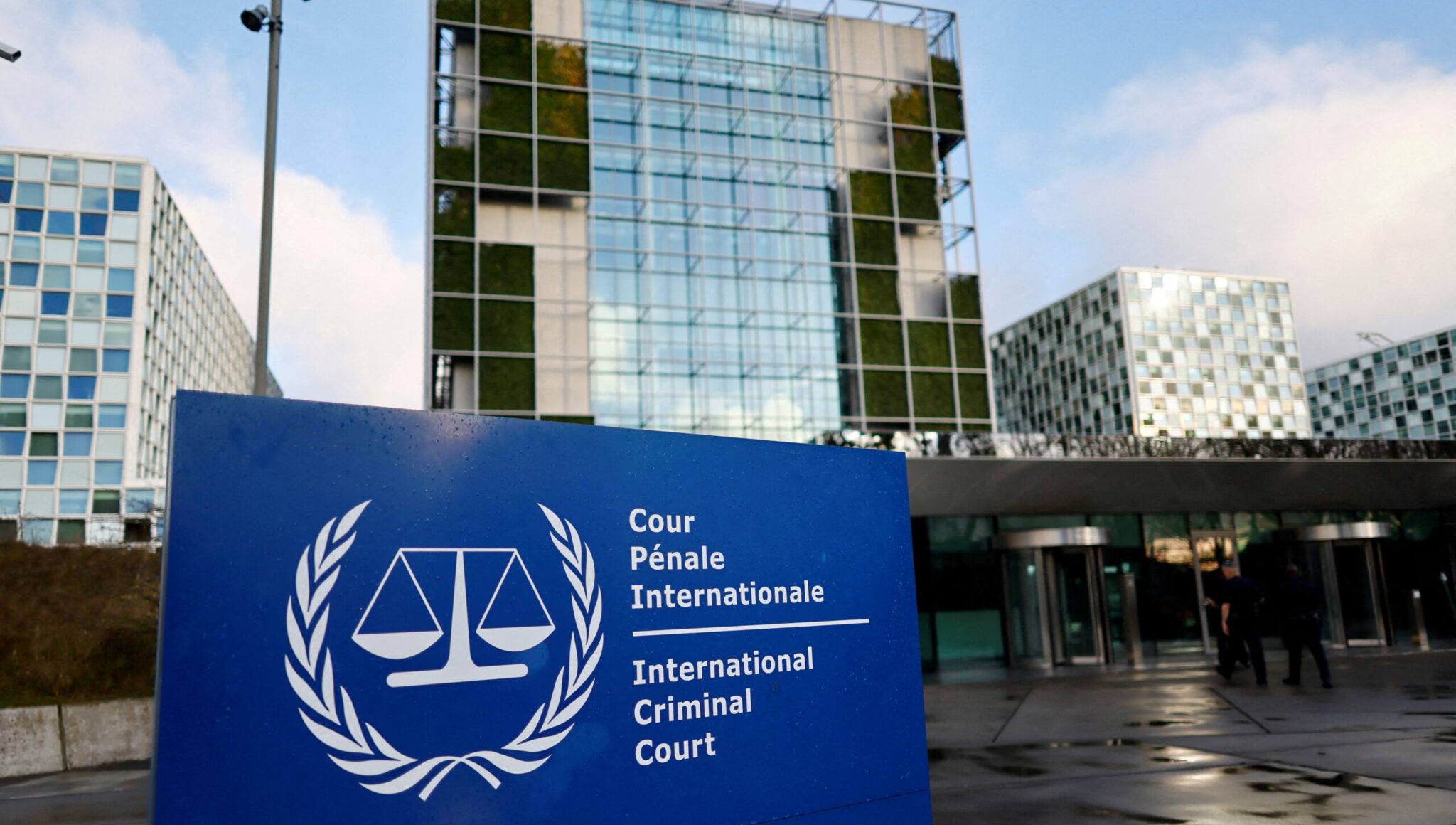
The US decision to impose sanctions on the International Criminal Court (ICC) on October 9th 2026 marks a new escalation in Washington’s long-running conflict with the institution. The US designated the ICC on the SDN list. The sanctions will freeze the court’s US assets, ban financial transactions by US persons, and limit access to American technological and infrastructure support.
Secretary of State Marco Rubio has defended the move as a necessary response to what the Trump administration sees as an overreach of the Court’s authority and a threat to American sovereignty. Yet, the US position raises a fundamental question. Can a government invoke sovereignty to shield itself and its allies from international accountability? While Washington argues that the sanctions protect its national interests, they risk undermining international justice and reinforcing concerns that powerful states are exempt from international rules.
Rubio’s Ultimatum
In his press statement, Marco Rubio was clear: “Either the ICC will end its threats, or we will end the ICC”. He accused the organization of trying to prosecute American citizens, highlighting that the ICC wants more power “at our expense”. The US aims to cut the ICC's resources and cripple its ability to operate (Press Statement 2026).
Thus, Rubio’s rhetoric weaponizes a starkly realist framework by framing the ICC not as a legitimate international legal arbiter, but as an existential threat to American sovereignty. Through zero-sum ultimatums and promises to disrupt the ICC's operations, his language strips international institutions of moral authority and reduces global diplomacy to a raw calculation of hard power. In a realist world, foreign policy is transactional, where global rules matter only when they serve the strategic interests of one of the world’s dominant superpowers.
Sovereignty vs Justice
The reasons behind the US decision were possibly not limited to the ICC arrest warrants for Israeli Prime Minister Benjamin Netanyahu and former Defence Minister Yoav Gallant for suspected war crimes in Gaza. The ICC sanctions coincided with former South African ICC judge Navi Pillay’s Nobel Prize award on the same day. Trump was frustrated. In his Truth Social post, he claimed: “...she, very obviously, hates Israel”, thus trying to discredit her. The US has previously targeted multiple ICC judges and prosecutors, including the ICC President, Tomoko Akane. However, Pillay’s award could add a personal dimension to Trump’s hostility toward the ICC, given his public discontent over not receiving the Prize.
The ICC itself called sanctions an attempt to “obstruct the course of justice” and “an assault on the rule of law”, adding that “history will judge this moment”. The foreign ministers of the UK, Denmark, France, Germany, Italy, the Netherlands, Canada, and Japan, all direct US allies, strongly disagreed with the sanctions (Maguire 2026). Perhaps this could alienate European countries from the US while Trump’s administration is in power.
The Trump administration’s approach to international institutions has raised questions about its weak commitment to international law. In January 2026, US forces captured Venezuelan President Nicolás Maduro. Experts questioned the operation’s legality (Maguire 2026). Trump also publicly discussed plans for the US to manage Venezuela and exploit its oil resources, fueling criticism that strategic and economic interests were central to Washington rather than international law. In addition, American support for Israel amid the devastating war in Gaza shows that the US applies principles of accountability inconsistently.
Joint US-Israeli attack on Iran deserves special attention. Trump claimed the attack aimed to eliminate a direct threat to the US. Nevertheless, Ben Saul, the UN special rapporteur on the promotion of human rights and counterterrorism, said the attack was unjustified because the US did not seek authorization from the UN Security Council, nor was it a self-defense operation in response to an armed attack (Harb & Osgood 2026). Article 2(4) of the UN Charter generally prohibits the threat or use of force against another state.
While neither the US nor Israel is a party to the Rome Statute, the ICC may exercise jurisdiction over alleged crimes committed on the territory of a State Party, even when the accused are nationals of non-member states. This challenges Washington’s claim that the ICC’s actions violate US sovereignty. As a result, this conflict tests the international legal order.
Bibliography
- Harb, A., Osgood, B. (2026). Are US-Israeli attacks against Iran legal under international law? AlJazeera
- Maguire, C. (2026). Why is the US sanctioning the International Criminal Court? AlJazeera
- Press Statement (2026). Marco Rubio, Secretary of State. Imposing Sanctions on the International Criminal Court. U.S. Department of State
- Trump, D. J. (@realDonaldTrump) (2026). “This is the woman who received the Nobel Peace Prize over the Great United States of America, whose Representative, ME, settled eight Wars, and many other things…” Truth Social
- United Nations (n.d.). United Nations Charter
About the Author

Alexandra Eleferenko
Geopolitical Analyst
Based in Spain, Alexandra is a geopolitical analyst and independent researcher holding a Master's degree in International Relations from IE University, with a specialization in Global Governance and International Cooperation. Her research focuses on Russia, digital diplomacy, and the strategic use of sports diplomacy. From 2021 to 2024, she served as a contributing writer for the IE International Policy Review.