Commentary · By Melissa K. Cannell
The GOP at a Crossroads: Will the Midterms Redefine the Republican Party?
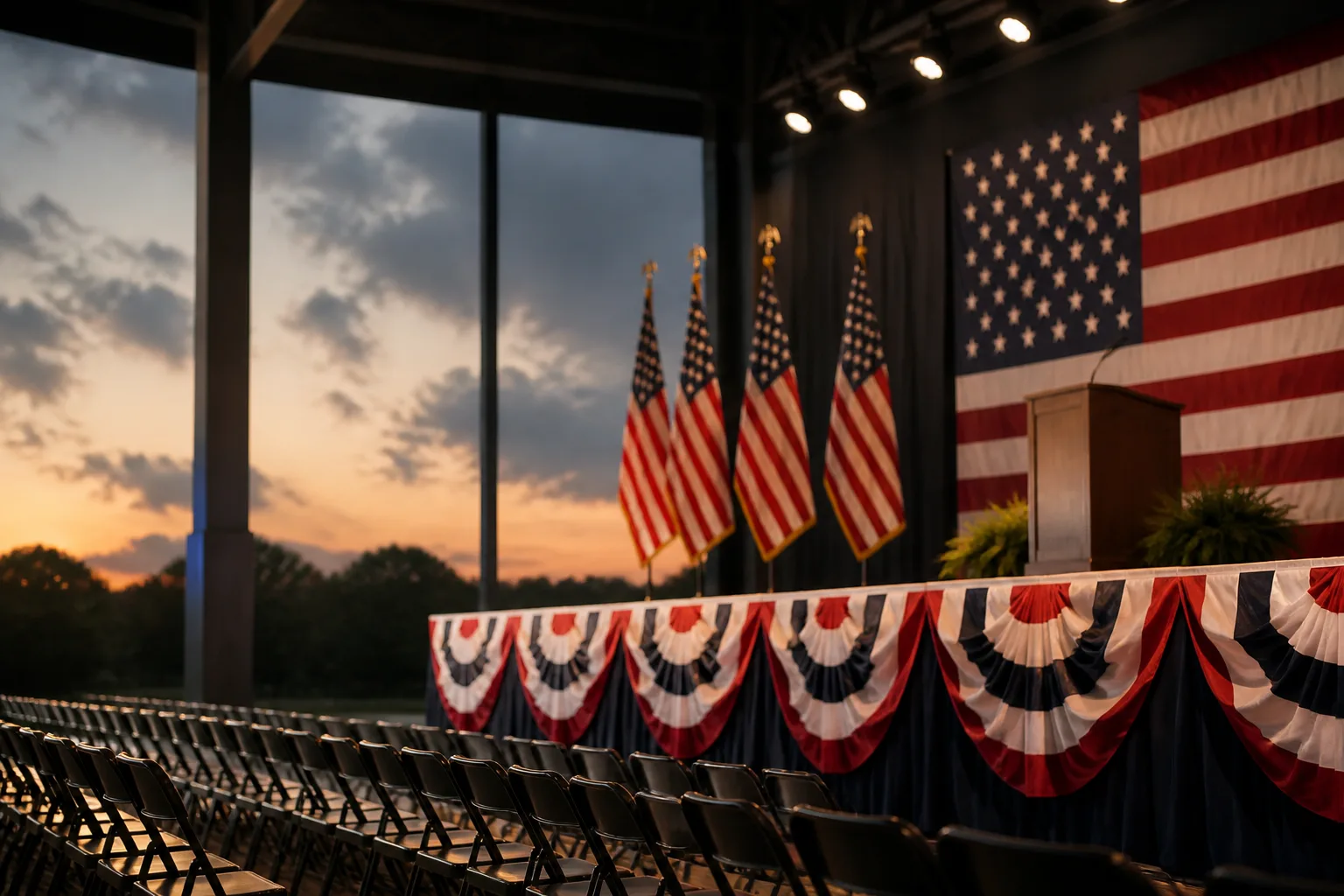
For Republicans, the biggest questions may emerge after voters cast their ballots on November 3. Americans will decide which party controls Congress, but the results could also raise uncomfortable questions about the Republican Party's leadership, political priorities, and future direction.
The GOP has already made some unusual moves this election season, including holding a midterm national convention in Dallas. Republican-aligned organizations have also changed how they spend campaign money. On October 14, the Associated Press reported that the Congressional Leadership Fund, a major Republican-aligned super PAC, pulled advertising from four House races while increasing spending in 16 others. These decisions show how Republican strategists have to weigh which races deserve additional support.
But winning or losing congressional seats is only part of the story. Elections determine who holds political power. Reorganizing a party means deciding how its leaders share, manage, and exercise that power.
How Is the Republican Party Organized?
The Republican Party doesn't operate as a single organization under one leader. Instead, national, state, and local organizations each handle different responsibilities.
All national campaigns, fundraising, and support for candidates are coordinated by the Republican National Committee (RNC), which coordinates national campaigns, raises money, and supports candidates. Regional party operations are facilitated by state and local committees that oversee party operations. Republican leaders in Congress help set legislative goals and organize lawmakers. The party’s course is heavily influenced by President Donald Trump and other elected Republicans.
These organizations work together, but they don't always share the same priorities or decision-making authority.
Who Will Shape the GOP's Future?
Trump has remodeled the Republican Party's political identity, particularly on immigration, trade, foreign policy, and the federal government's role. Still, he isn't the only Republican influencing the party's future. Congressional leaders, governors, and RNC officials also help shape legislation, fundraising, and candidate recruitment.
Some Republicans are already considering possible leadership alterations. Axios reported October 14 that losing the House majority could trigger a leadership contest involving Speaker Mike Johnson, Majority Leader Steve Scalise, and Rep. Jim Jordan.
But changing leaders doesn't necessarily change how the party operates. A large reorganization would require Republicans to reconsider how they make decisions, divide responsibilities, and coordinate their work across party organizations.
Institutional Change
Republicans may reorganize gradually rather than overhaul the party all at once.
During November and December, Republican lawmakers will choose their congressional leaders and prepare for the next Congress. National and state party organizations may also review election results, campaign plans, fundraising, and candidate recruitment.
When Congress convenes on January 3, 2027, Republican lawmakers will begin pursuing legislative priorities under their newly selected leaders. The RNC and state organizations could separately consider changes to their own operations.
The election results may influence how far those discussions go. Losing the House majority could increase pressure for leadership reforms. Keeping it might encourage Republicans to maintain their current approach. Neither outcome guarantees a major restructuring.
The real test will be whether Republicans change how they recruit candidates, distribute resources, make decisions, or coordinate their work across party organizations.
Defining the Republican Coalition
The GOP also faces another question: How does a party with different political priorities find common ground?
The MAGA movement has altered Republican priorities and challenged some traditional conservative positions. But Republicans don't always agree on government spending, trade, foreign policy, or federal authority.
Trade offers one example. Axios reported September 2 that Republican Reps. Zach Nunn of Iowa and Bill Huizenga of Michigan raised concerns that Trump administration trade policies are affecting agriculture and business relations with Canada. Their objections highlight a familiar political problem: A national policy may appeal to one part of a party while creating difficulties for constituents elsewhere.
Foreign policy has exposed similar disagreements. After Trump's October agreement on Russian diesel supplies, Pennsylvania Republican Rep. Brian Fitzpatrick sought a House vote to oppose the arrangement. Six Republican senators also joined Democrats in urging Trump to reverse the deal, arguing that it could benefit Russia while the United States was trying to pressure Moscow over Ukraine.
The Republican coalition includes America First supporters, business-oriented Republicans, traditional fiscal and social conservatives, and voters whose political views cross ideological boundaries.
Finding common ground could influence which candidates receive support, where campaign money goes, and which policies Republican lawmakers pursue. Still, political disagreements don't automatically require a new party structure.
Beyond November 3
Whatever happens on Election Day, Republicans will face decisions about their leadership, priorities, and relationships within the party.
The 2028 presidential election may show more clearly how much the GOP has changed since 2024. But a new leader or a different political message won't necessarily mean the party has reorganized.
The more revealing question is whether Republicans change how they make decisions, work together, and exercise political power. Those choices, not just the election results, will help determine what the Republican Party becomes next.
References
- (June 29, 2026). Trump announces first-ever Republican midterm convention in Dallas ahead of 2026 elections. CBS News. https://www.cbsnews.com/texas/news/trump-midterm-convention-republicans-dallas-september/
- (October 13, 2026). Congressional Leadership Fund Adjusts Advertising Strategy in House Races. Associated Press. https://apnews.com/article/congressional-leadership-fund-adjusts-advertising-strategy-2026-10-14
- (October 11, 2026). Top Trump operative enlisted to rescue Kansas senator's campaign. Axios. https://www.axios.com/2026/10/12/top-trump-operative-kansas-senate-race
- (2026). The Changing Role of Foreign Policy at the U.S. National Conventions. Council on Foreign Relations. https://www.cfr.org/articles/changing-role-foreign-policy-us-national-conventions
- (October 13, 2026). Republicans brace for three-way leader fight if they lose. Axios. https://www.axios.com/2026/10/14/house-gop-brewing-three-way-leadership-fight
- (November 12, 2024). Republican leadership elections: John Thune, Mike Johnson picked by their party. NPR. https://www.npr.org/2024/11/13/nx-s1-5188585/house-senate-republican-leadership
- (2026). House Republican Leadership. house.gov/leadership. https://www.house.gov/leadership
- Hubbard, K. (October 12, 2026). Bipartisan senators urge Trump to rescind Russian diesel deal, calling it a "betrayal" of Ukraine. CBS News. https://www.cbsnews.com/news/senators-trump-russia-diesel-deal-ukraine/
- Kamarck, E. & Jr., E. D. (2026). MAGA Republicans won the party but may lose the future. Brookings Institution. https://www.brookings.edu/articles/maga-republicans-won-the-party-but-may-lose-the-future/
- Santaliz, K. (September 1, 2026). Inside House Republicans' beef with Trump's trade agenda. Axios. https://www.axios.com/2026/09/02/house-republicans-trump-tariffs-beef-canada-white-house
- Hubbard, K. (October 12, 2026). Bipartisan senators urge Trump to rescind Russian diesel deal, calling it a "betrayal" of Ukraine. CBS News. https://www.cbsnews.com/news/senators-trump-russia-diesel-deal-ukraine/
About the Author
Melissa K. Cannell
Reporter · Freelance Correspondent · Public Relations
Melissa K. Cannell is a newspaper reporter, freelance correspondent, and public relations representative. A graduate of Weber State University in Ogden, Utah, her writing has appeared in the Davis County Clipper, the Davis County Clipper Today, Utah Spirit magazine in Bountiful, Utah, and the Deseret News in Salt Lake City.
More from Melissa →